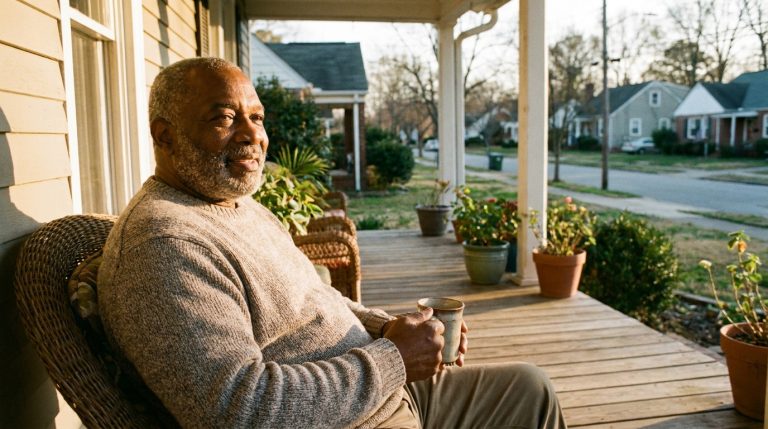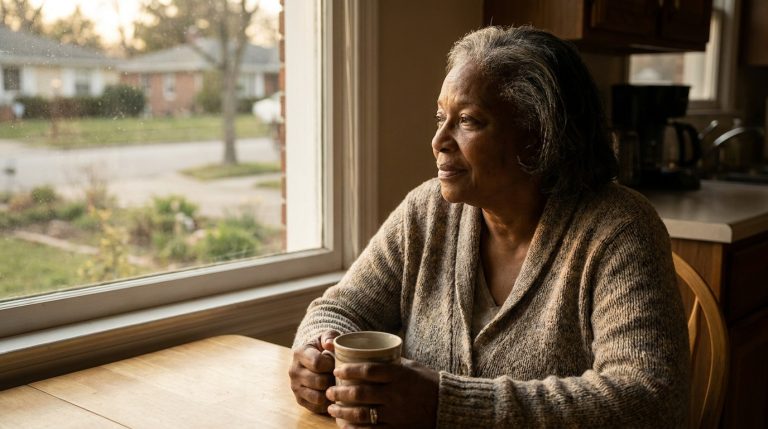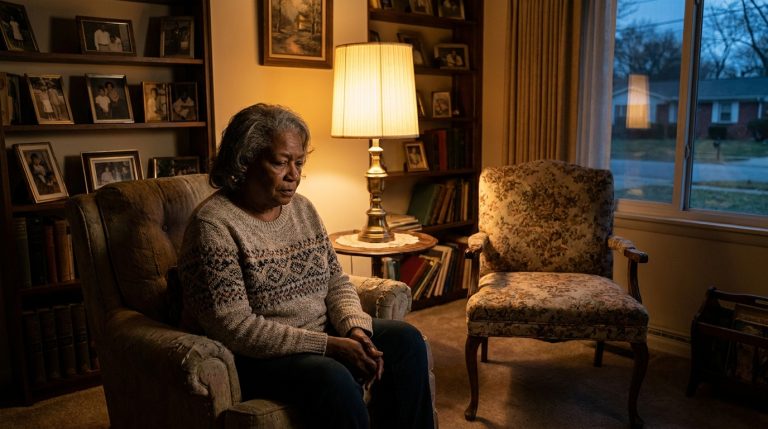
The Worry Nobody Sees: What Retirement Really Costs Us on the Inside
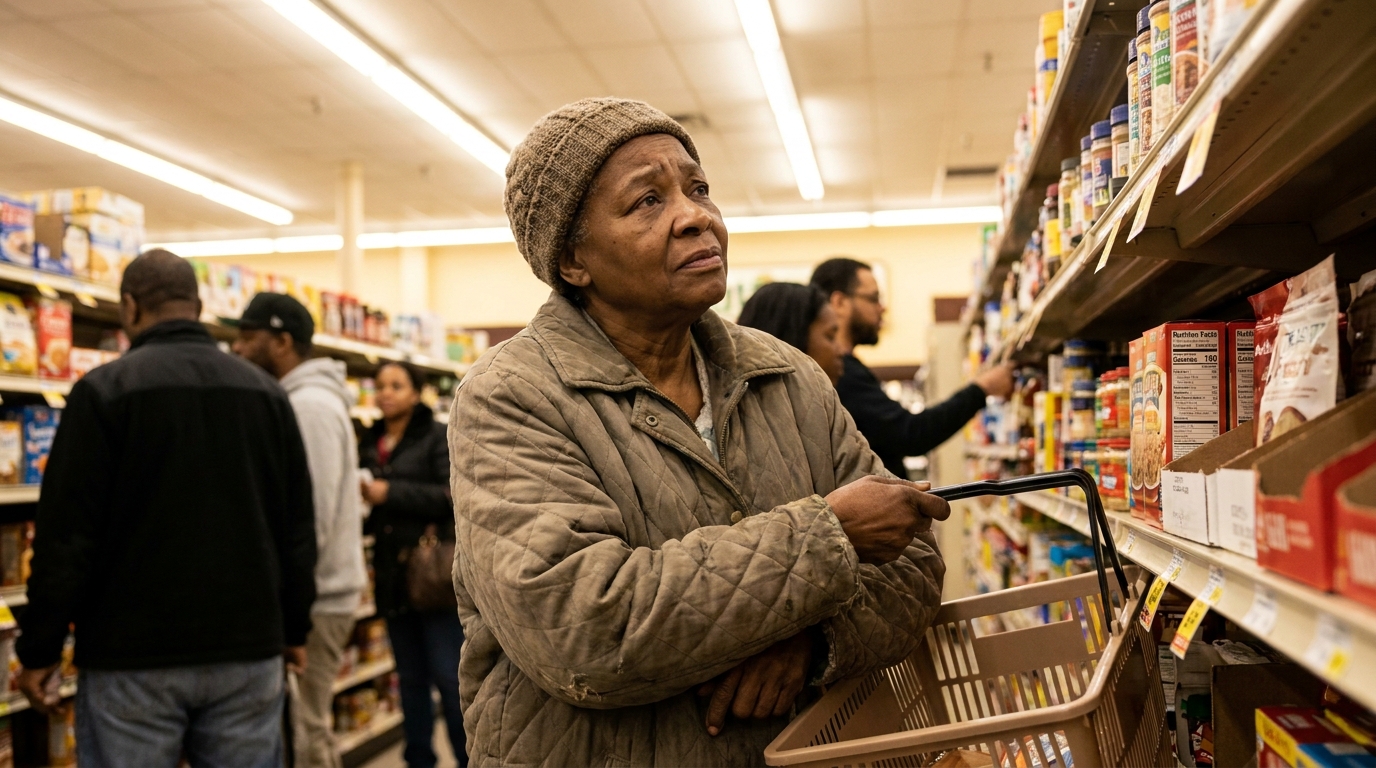
Last Thursday, I stood in the cereal aisle at the grocery store for longer than I care to admit.
Not because I couldn’t decide what I wanted. I knew what I wanted. I’ve been buying the same oatmeal for thirty years. I stood there because the price had gone up again, nearly a dollar more than last month, and I was doing quiet math in my head. The kind of math that has nothing to do with numbers on a page and everything to do with that small knot that lives just below your ribs when you’re trying to make things stretch.
I put it in the cart. I moved on. But I thought about that moment the whole drive home.
This is the part of retirement that nobody films a commercial about.
The Math That Never Quite Rests
I did everything they told me to do. I worked. I saved. I didn’t live extravagantly. I packed my lunch and drove my cars until they begged me to stop. My husband and I sat down with a financial planner years before we retired and we made a plan, a real one, and we felt good about it.
And we should feel good about it. I know that.
But here is what the plan could not account for: the way the world keeps changing the rules after you’ve already left the game. Groceries cost more. Gas costs more. My property taxes went up. My Medicare supplement premium went up. The dentist, lord, the dentist, I didn’t budget for what teeth cost when you’re in your sixties.
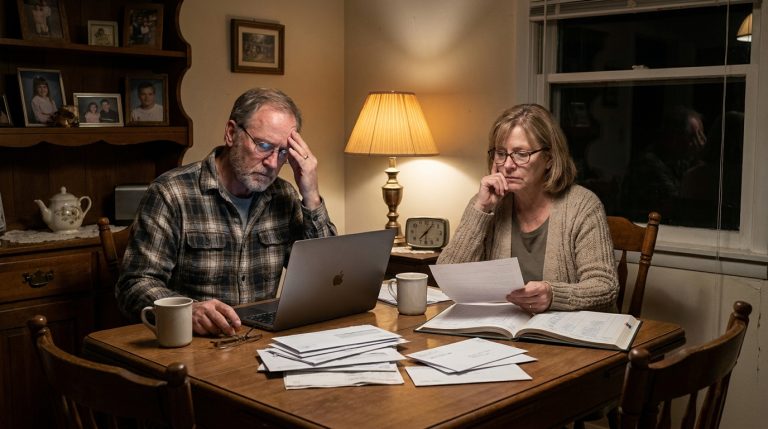
Every month I sit down with my little notebook and I go through what came in and what went out. And most months it balances. But there is always one or two things that shifted just enough to make me recalculate. And that recalculating never feels neutral. It carries weight. A quiet, persistent kind of weight that follows you from the kitchen table to the bedroom and sometimes sits right there with you in the dark at two in the morning.
Inflation is not just an economic term for people living on fixed incomes. It is a feeling. A slow, creeping unease that whispers, what if the numbers stop working?
The Question I Can’t Quite Say Out Loud
There is a question I have never asked my financial advisor directly, even though it lives in the back of my mind like a tenant I never invited.
What if I live longer than the money does?
I am a healthy woman. My mother lived to eighty-nine. Her mother made it to ninety-three. Long life runs in my family like a gift, and most days I am grateful for it. But there are mornings when I look at my accounts and I think about what ninety-three actually means in dollars, in prescriptions, in years of grocery stores and heating bills and car insurance, and the gift starts to feel complicated.
Nobody prepares you for the math of a long life. We prepare for retirement. We don’t always prepare for the thirty years that retirement might actually be.
I don’t say this to anyone. Not even to my husband, not completely. Because saying it feels like complaining, and I was raised not to complain when you have enough. But having enough today and knowing whether you’ll have enough in twenty years are two very different kinds of peace. And only one of them lets you sleep.
What Happens at the Pharmacy Counter
I pick up four prescriptions every month. They are not dramatic medications, just the ordinary maintenance of a body that has been working hard since 1967. Blood pressure. Cholesterol. A thyroid thing. Vitamin D because apparently the sun stopped counting.
Every month I hand over my insurance card and I wait. And there is a moment, just a breath really, between when they scan it and when the total appears, where I feel something I can only describe as bracing. Like I’m preparing for a small impact.
Most months it’s fine. But fine is not the same as easy. Fine means I checked before I came, I moved some money, I planned for it. Fine takes effort that used to go toward other things.
Healthcare is the great uncertainty of retirement. You can plan around almost everything else, but your body does not consult your budget before it decides what it needs. And the gap between what insurance covers and what health actually costs is wide enough to keep a careful woman up at night.
The Children We Raised Who Now Worry About Us
My daughter calls every Sunday. I love those calls. I love her voice and her stories about the grandchildren and the easy way we can talk for an hour about nothing and everything.
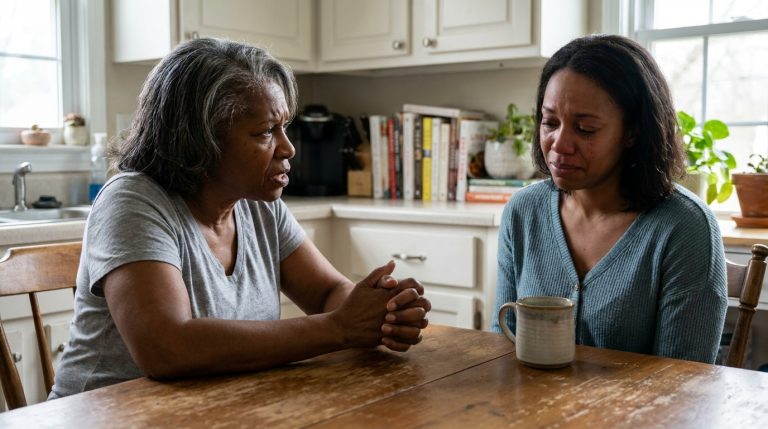
But lately I notice something in her voice when the conversation turns to how I’m doing. A particular kind of careful. She asks about my car, whether I need anything, whether things are okay. And I know what she’s really asking. She’s asking the question adult children ask when they love their parents and they’re starting to wonder.
I always say I’m fine. And mostly I mean it.
But there is a quiet pressure that comes with being the parent who doesn’t want to be a burden. Who worked her whole life so her children wouldn’t have to worry. Who still, at sixty-seven years old, wants to be the one who has it together.
I’ve spoken to women my age who have quietly helped their adult children through hard times, a layoff, a divorce, a grandchild’s unexpected medical bill. They gave because they could and because they wanted to. But giving when you’re on a fixed income is a different calculation than giving when you’re still earning. And some of them gave more than they should have, not because they were careless, but because they were mothers.
The emotional pressure of retirement doesn’t only come from within. Sometimes it comes from love, from family, from not wanting the people you raised to see you struggle or to struggle themselves.
What I’ve Learned to Do With the Worry
I won’t tell you the worry disappears. I don’t think that’s honest.
What I will tell you is that I’ve learned to sit with it differently. I’ve learned to open the notebook, look at the real numbers, and then close it. Not ignore it, but not live inside it either. There is a difference between being responsible and being consumed.
I’ve learned to talk to my husband more honestly about money than we ever did when we were working. Back then there was always more coming. Now we have what we have, and tending it together feels like a kind of intimacy we didn’t expect.
I’ve learned that the two in the morning thoughts are almost always worse than the daylight ones. That my body metabolizes fear at night and facts in the morning. So I try to save the real thinking for when the sun is up.
And I’ve learned that there is a particular kind of grace that comes from having planned carefully and then trusting that plan, even when the world keeps shifting. Not blind trust. Not naive trust. But the steady, earned trust of someone who did the work and is still doing it, one Thursday grocery run at a time.
The oatmeal went in the cart. I’m still here. That counts for something.
Miss Marky is a retired school counselor, grandmother, and writer living in the American South. She writes about life, aging, and the quiet courage it takes to begin again.