Nobody Told Me It Would Feel Like This: The Quiet Emotional Truth About Retirement
They gave me a sheet cake. Yellow with white frosting, the kind that comes in a flat cardboard box from the grocery store. My name was written on top in blue gel, Congratulations, Marky!, and everyone sang and hugged me and said things like, “You’ve earned it,” and “Now the fun begins.”
I smiled. I cut the cake. I drove home.
And somewhere on the interstate, with a car full of the things I’d cleaned out of my desk, my good scissors, the little succulent I’d kept alive for six years, a framed photo of my grandchildren, it hit me. A feeling I didn’t have a name for yet. Not sadness, exactly. Not joy. Something quieter and stranger than either.
That was three years ago. And I’ve spent most of those three years trying to find the right words for what retirement actually is, not the glossy magazine version, not the financial planning brochure with the silver-haired couple on the beach, but the real, everyday emotional experience of a woman who worked for 38 years and then, one Tuesday afternoon, simply… didn’t.
Let me tell you what nobody told me.
The Mornings Are the Hardest Part
For nearly four decades, my mornings had a shape. Alarm at 5:47. Coffee. NPR. Iron something. Out the door by 7:15. I didn’t always love it, but it was mine. It was structured. It was the architecture of my days.
When that was gone, I didn’t know what to do with 6 a.m.
The first few weeks, I’d wake up at the same time anyway, my body didn’t get the memo, and I’d lie there in the gray early light feeling like I’d forgotten something important. Like I was late for something. Then I’d remember. And that remembering was its own complicated thing.
I thought I’d feel relief. And some mornings I did. But on others, there was this low, humming anxiety that I couldn’t shake before noon. An unmoored feeling. Like a boat that’s been cut loose from the dock and hasn’t yet decided if that’s freedom or danger.
No one prepares you for what it feels like when routine, not just a routine, but your routine, the one that organized your whole sense of self, simply disappears.
I Didn’t Know How Much of Me Was My Job
This is the part that surprised me most. And I think it surprises a lot of us, especially those of us who worked in jobs that weren’t just paychecks but callings. I was a school counselor for 31 years. I knew every child’s name in that building. I knew which ones needed a little more grace on Mondays. I knew which parents to call first.
That work was woven into who I was.
When people used to ask “What do you do?”, I had an answer that felt complete. Now when someone asks, I still feel a small stutter in my chest before I say, “I’m retired.” Like I’ve handed in my badge and I’m not sure what card I carry now.
Identity is a funny thing. We think it belongs to us, deep and internal. But so much of it is built on the external, on our roles, our titles, our daily usefulness to others. And when those structures are removed, you find yourself asking questions you thought were settled long ago.
Who am I when I’m not being needed?
That question sat with me for a long, quiet year.
The Loneliness Nobody Mentions
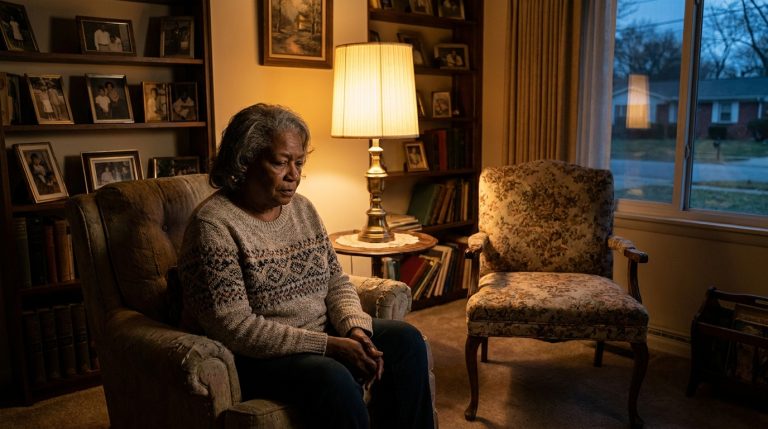
I have a good marriage. I have children and grandchildren I adore. I have friends I’ve known since before my hair had any gray in it. And still, I experienced a loneliness in early retirement that I didn’t know how to explain to anyone without sounding ungrateful.
The workplace, even when it frustrated me, had given me something I underestimated: daily human contact. Not deep intimacy, necessarily, but the small, sustaining warmth of people who knew your name, who said good morning, who stopped by your door just to talk for five minutes about nothing important.
That texture of daily connection, I hadn’t realized how much I was living inside it until it was gone.
Retirement can be isolating in ways that sneak up on you. Especially for those of us who spent our careers at the center of something, a team, a department, a community, and then find ourselves, suddenly, at home. Quiet. Waiting for the phone to ring.
I started going to the same coffee shop every Tuesday and Thursday morning. Not for the coffee, really. For the woman at the counter who always said, “The usual, Miss Marky?” That little moment of being known did more for me than I can properly explain.
The Grief That Doesn’t Have a Funeral
Somewhere in the second year, I understood that what I’d been feeling, off and on, was grief.
Grief for the version of myself that had a clear purpose every single day. Grief for the rhythms and rituals that held my life together. Grief, even, for the stress, because at least the stress meant I was needed.
We don’t talk about this enough. Retirement is presented as an arrival, a destination, a reward. And it can be all those things. But it is also a loss. And losses deserve to be grieved honestly, not rushed past with a smile and a golf club.
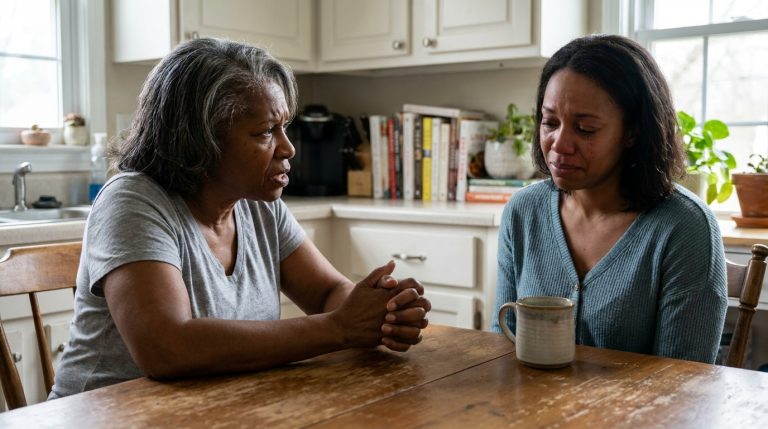
I gave myself permission to grieve. I sat with the feeling instead of decorating over it. I talked to my sister about it, really talked, not the “I’m fine, just adjusting” version, but the real one. She’d retired two years before me, and she said, “Baby, I cried in a Kroger parking lot for no reason for about four months. You’re not alone.”
That made me laugh. And then it made me cry. And then I felt better than I had in months.
Finding My Way Back to Myself
I won’t pretend I’ve arrived at some perfect peace. Some days are still gray around the edges. But I’ve found things that have helped me build a new architecture for my days, slower, quieter, but mine.
I started volunteering at an after-school reading program. One afternoon a week. Small enough not to overwhelm, meaningful enough to matter. When a seven-year-old named DeShawn finally read a full sentence on his own and looked up at me like I hung the moon, well. Some things don’t retire.
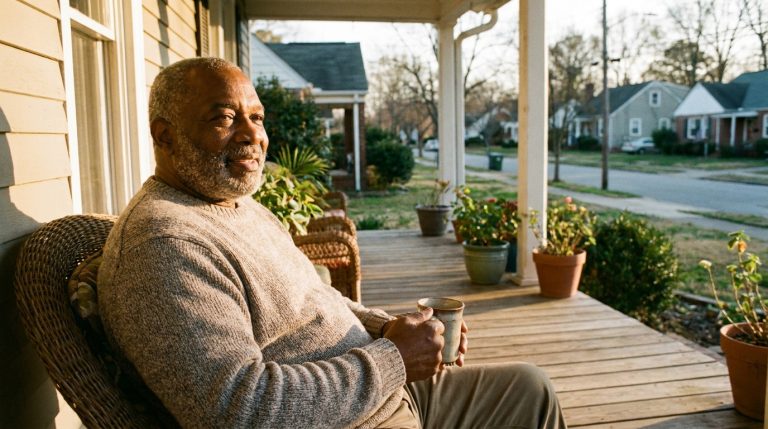
I started walking every morning, not for fitness really, but for the ritual of it. The sameness. My feet on the same sidewalk, the same neighbor’s roses in bloom or not, the same sky doing whatever it does. There is comfort in small, chosen repetitions when the big ones are gone.
I started writing things down. Not a formal journal, just a little notebook where I scribble what I notice, a phrase I liked, something that made me feel grateful, a memory that surfaced. It’s made me more present in my own life.
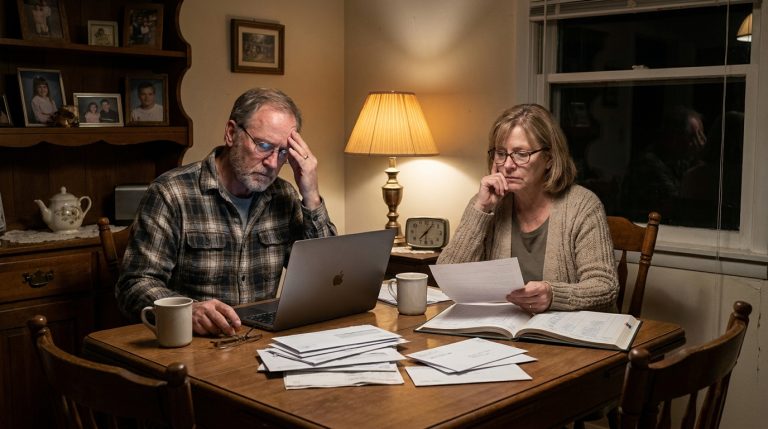
And I’ve made a kind of peace with money. That’s its own quiet relief. We weren’t wealthy, my husband and I, but we were careful. We planned. Not perfectly, nobody does anything perfectly, but thoughtfully enough that I don’t lie awake worried about whether the lights will stay on. That financial steadiness, that sense that our practical lives are on solid ground, has given me the emotional space to actually feel everything else without panic underneath it. Peace of mind isn’t just an emotion. Sometimes it’s a foundation.
What I’d Say to You, Right Now
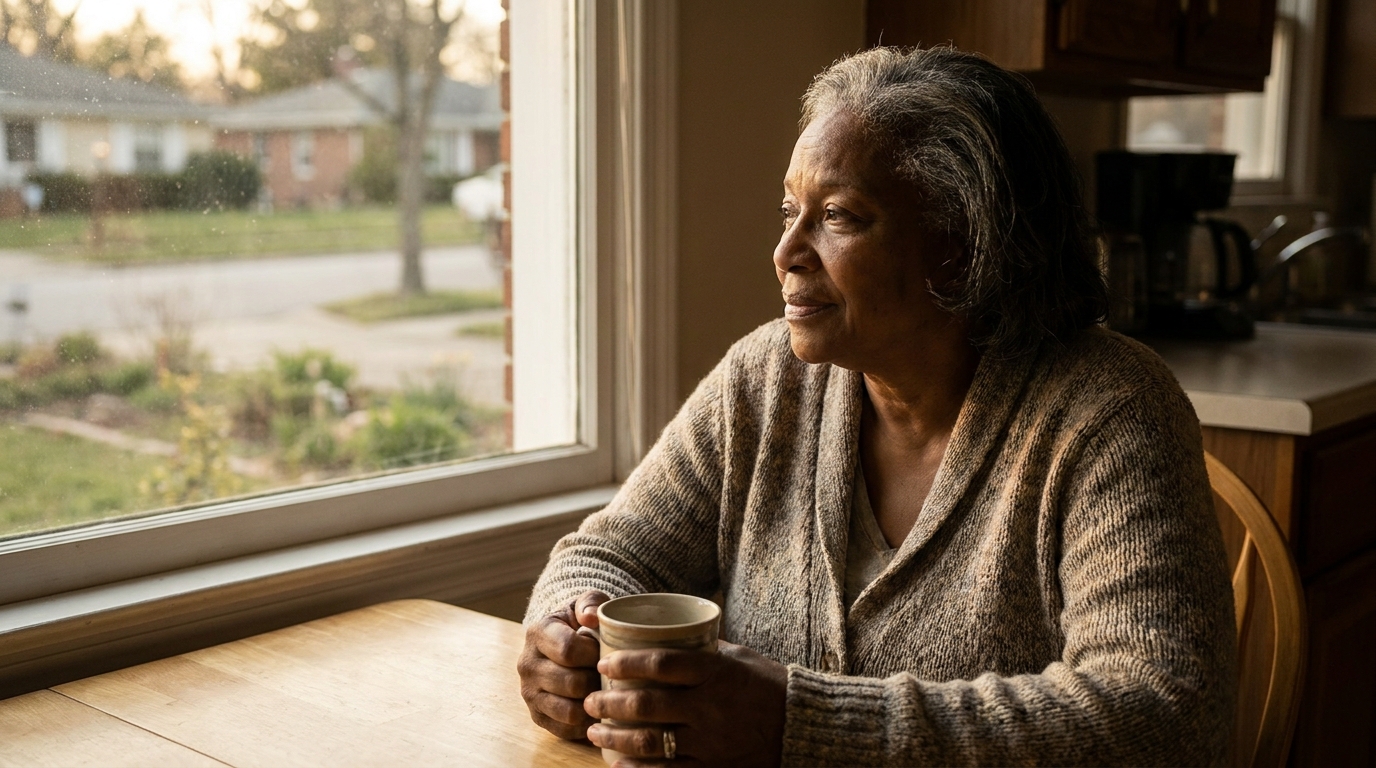
If you’re approaching retirement, or you’re in the thick of that first strange year, I want you to know: what you’re feeling is real and it is valid and you are not the only one sitting quietly in your kitchen at 7 a.m., trying to figure out who you are now.
The magazines won’t tell you this. The financial seminars won’t cover it. But the emotional work of retirement is just as real as the financial work, and for many of us, it’s harder.
Give yourself time to grieve what’s ending. Give yourself permission to feel lost without feeling like a failure. Find your small rituals. Find your people. Find the thing, even a small thing, that makes you feel useful, connected, alive.
You spent decades showing up for others. Now the work is learning how to show up for yourself. That is not a small thing. That is, maybe, the most important work of all.
The cake was good, by the way. Even grocery store yellow cake has its sweetness, if you let it.