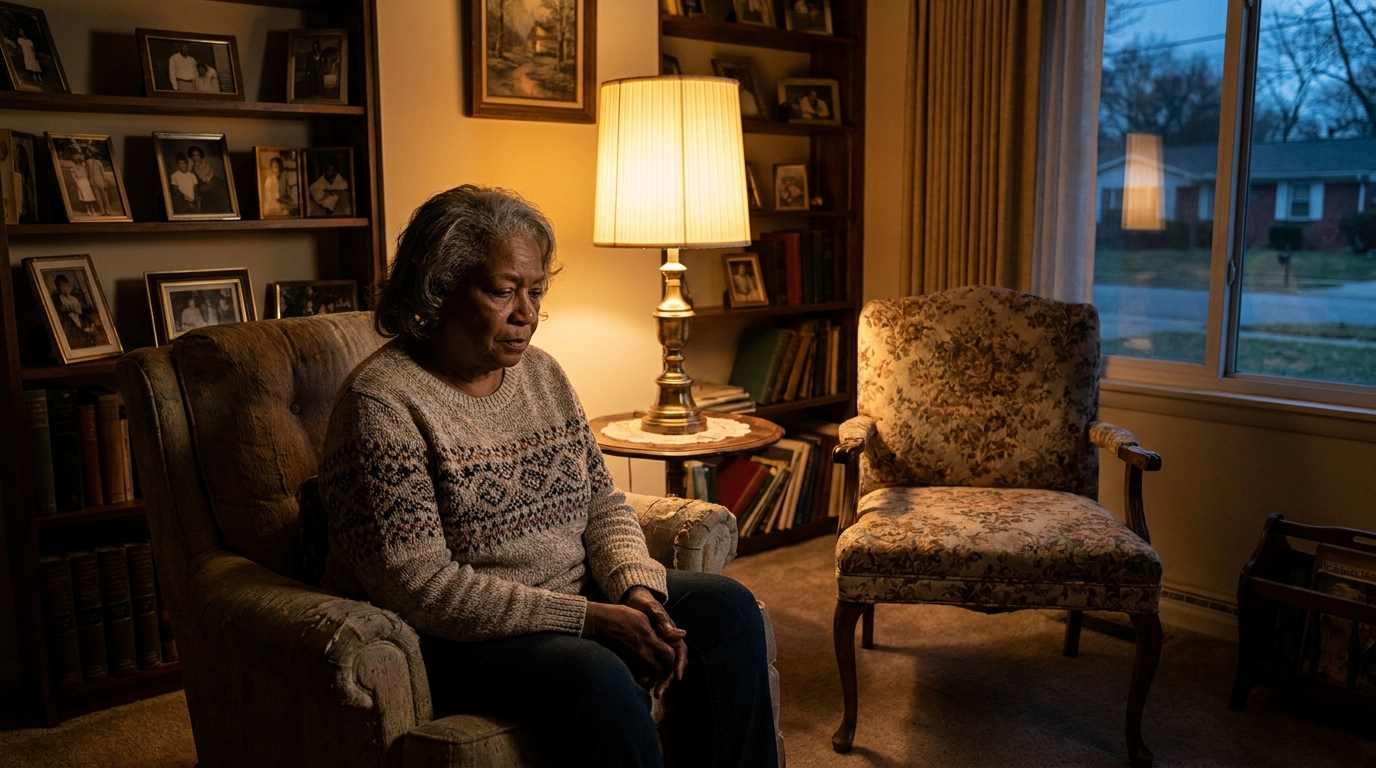
The Loneliness Nobody Talks About After Retirement
The Quiet House: On Loneliness, Stillness, and Learning to Be With Yourself Again
The first Monday after I retired, I woke up at my usual time and lay in bed listening to the neighborhood come alive.
The Hendersons’ sprinklers going off at six fifteen. The school bus making its stop two blocks down, the hydraulic sigh of its doors opening and closing. A dog somewhere on the next street, barking twice at something, then going quiet. All of it the same as every other Monday morning I had woken up to for the better part of twenty years in this house.
Except that morning I had nowhere to be.
I remember the feeling vividly. Not quite relief. Not quite sadness. Something that lived in the space between the two, wide and unfamiliar, like walking into a room you’ve never been in before and realizing it’s inside your own home.
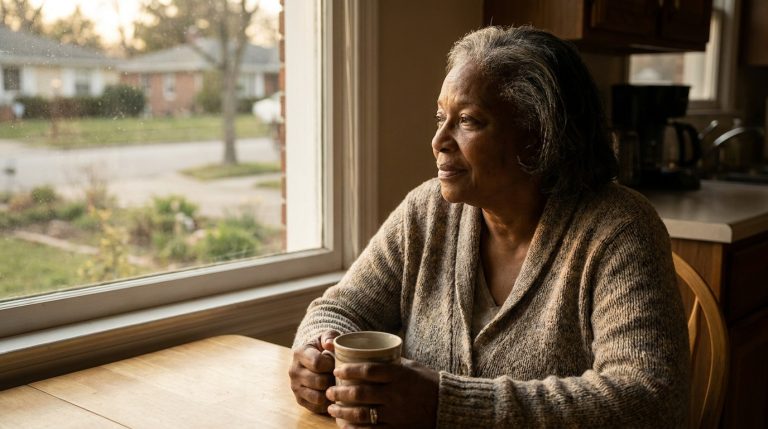
I got up. I made coffee. I stood at the kitchen window and watched the school bus pull away. And for the first time in decades, nobody needed me to be anywhere by any particular time.
I thought I would love it immediately.
It took considerably longer than that.
What Work Was Really Giving Us
We talk about work in terms of what it produces. The paycheck, the career, the contributions made and the years logged. We don’t always talk about what it quietly gives us on the inside, the things so woven into the daily fabric that we don’t notice them until they’re gone.
Work gave me a reason to get dressed. That sounds small. It wasn’t small. Having somewhere to be in the morning is a kind of anchor that holds more of your life in place than you realize until the anchor is lifted.
Work gave me people. Not always people I would have chosen on my own. Some of them I wouldn’t have. But they were there, every day, saying good morning, stopping by my office, eating lunch in the same break room, sharing the small unremarkable moments that accumulate into a sense of belonging. The colleague who always left the last of the coffee without making more. The receptionist who called me Miss Marky before anyone else did. The newer counselors who knocked on my door when they weren’t sure what to do. I was needed in a specific and daily way, and I didn’t fully understand what that meant to me until the needing stopped.
Work gave me a rhythm. A shape to the week. Mondays had a particular feeling, and so did Fridays. Even the difficult days, the long ones, the ones that drove home tired and quiet, those days had a structure inside them that organized my sense of time and purpose.
When all of that disappeared at once, the absence was louder than I expected.
The Long Afternoons
Nobody warned me about the afternoons.
Mornings I could fill. Coffee, a walk, errands, some task around the house. Mornings have a natural momentum to them. But the afternoons, particularly the ones in the first year, had a weight I wasn’t prepared for.
Two o’clock on a Tuesday in a quiet house in a quiet suburb is a specific kind of stillness. The street outside is empty because everyone else is somewhere they’re supposed to be. The television feels wrong at that hour, too loud and too passive at the same time. You’re not tired enough to rest and not purposeful enough to start something real.
I took to driving sometimes. Just getting in the car and going somewhere with mild intention. The library. The hardware store, even when I didn’t need anything. A park I used to drive past every day on the way to work and always told myself I’d stop at someday.
I was looking for the feeling of being in motion. Of being a person in the middle of her day rather than one who had somehow drifted to the edge of it.
I didn’t say this to anyone for a long time because it sounded like ingratitude. I had what so many people work toward. Rest. Time. Freedom. And here I was driving to a hardware store I didn’t need anything from at two o’clock on a Tuesday because I couldn’t stand the silence in my own home.
It took me a while to understand that what I was feeling wasn’t ingratitude. It was grief wearing a disguise.
The Social Architecture of a Working Life
I’ve come to think of the workplace as a kind of social architecture. It builds around you, over years, and you live inside it so completely that you forget it’s a structure at all. You forget that it’s holding something up.
When I left that building for the last time, I didn’t just leave a job. I left a community. I left the daily proximity of people who knew me in a particular and consistent way. People who knew I kept peppermint candies in my desk drawer and that I didn’t like to be spoken to before my second cup of coffee and that I always teared up a little at graduation ceremonies even when I was trying not to.
That kind of being known takes years to build. And it doesn’t transfer. The friendships were real, but they were friendships made of shared space and shared routine. When the space disappeared and the routine ended, most of them faded the way morning fog fades, gradually and without any single moment you can point to.
A few of my former colleagues and I made plans to have lunch regularly. And we did, for a while. But working people and retired people exist in different rhythms, and eventually the lunches became occasional, then rare, then something we spoke about warmly without actually scheduling.
I don’t say this with bitterness. I say it because I think it’s important to name honestly what retirement can do to a person’s social world. It can quietly empty it. And the emptying can happen so gently that you don’t notice until one day you realize the last real conversation you had was four days ago at the grocery store, and it was about cantaloupe.
What Loneliness Actually Feels Like at This Age
Loneliness at sixty is different from loneliness at thirty.
At thirty, loneliness is louder. It pushes. It demands remedy. At sixty, it settles in more quietly, like a cat that finds a warm corner of the house and simply stays there. You can go whole days carrying it without naming it. You mistake it for tiredness, or contentment, or just the natural pace of a quieter life.
I would sit in my living room some evenings and look at the room and feel a feeling I couldn’t immediately identify. Everything was fine. My husband was nearby. The house was comfortable. Dinner had been good. And still there was something low and hollow underneath the surface of the evening.
Eventually I understood it was the absence of consequence. At work, what I did every day mattered to someone in a direct and immediate way. A child was heard, a parent was guided, a situation was helped. The days had weight because they left marks in the world. In retirement, I had to learn, slowly and against my instincts, how to find that weight in smaller places.
The People Who Brought Me Back
I want to be honest about what helped, because I think some people are waiting to hear it.
It wasn’t a hobby. I tried hobbies. Some of them stuck and some didn’t, and the ones that stuck did help, but they weren’t the thing that moved the needle most.
It was people. Specific, real, consistent people in my actual physical life.
There is a woman named Harriet who I met at a community garden the summer after I retired. We were both there because we were both at loose ends, though we didn’t know that about each other yet. She was funny and plain-spoken and not particularly interested in talking about her feelings, which made talking to her a relief after all the careful emotional conversations I’d been having with myself.
We started meeting for coffee on Wednesday mornings. We still do. We’ve been doing it for two years and three months. Those Wednesday mornings have become a small, reliable light in my week. Not because we say anything profound. We don’t, mostly. But because being a person who has somewhere to be on a Wednesday morning at nine o’clock matters more than I can properly explain.
I also went back to the school district as a volunteer reading mentor. One afternoon a week. Small enough to manage, meaningful enough to matter. The first afternoon I walked into that building and a child looked up at me like I had something they needed, I felt something click back into place that I hadn’t realized was loose.
Purpose doesn’t require a salary. But it does require showing up somewhere, to someone, on a regular basis. I believe that now more than I believe almost anything else.
Learning to Live in the Quiet
I have made a kind of peace with the quieter life. Not a resigned peace, but a chosen one.
I have learned that the stillness that once frightened me contains things I was always moving too fast to notice. The particular way light falls across my kitchen floor on winter mornings. The sound of my husband reading in the next room, the occasional soft turn of a page. The neighbor children who play outside after school and remind me, without knowing they do, that the world is still full of beginning.
The loneliness didn’t disappear. I don’t think it does, completely, for most of us in this season. But I have learned to tend to it instead of fleeing from it. To recognize it as information rather than failure. To let it tell me where I need more connection, more presence, more of the specific warmth that only comes from other people.
The quiet house is still quiet. But I have learned, slowly and with some difficulty, to hear what it’s actually saying.
It’s saying: slow down. Pay attention. You have time now. Use it for the things that mattered all along.