Inflation Changed The Way Many Americans Feel About Retirement
I keep a small notebook in my purse. Not for phone numbers or appointments. Those live in my phone now, like everyone else’s. This notebook is for prices.
I started it about two years ago, almost without deciding to. I’d come home from the grocery store and I’d find myself recounting what things cost, not to anyone in particular, just turning the numbers over in my mind the way you worry a loose button with your fingers. After a while I started writing them down. Chicken thighs. Butter. A dozen eggs. The particular brand of orange juice my husband has been drinking every morning since before our youngest was born.
I look back at those early pages sometimes. And then I look at what I paid last week. And I sit with that for a moment before I close the notebook and put it away.
The notebook doesn’t solve anything. I know that. But there is something about bearing witness to a change, writing it down, making it real on paper, that feels necessary when the world is quietly rearranging the terms of a life you carefully planned.
The Plan We Made in Good Faith
My husband and I spent the better part of two years preparing for retirement. We sat with an advisor. We ran projections. We looked at what we’d need monthly, built in a cushion for surprises, and made what felt, at the time, like a genuinely responsible set of decisions.
We were not naive people. We knew costs would rise. Inflation was a word in our planning conversations. It appeared in the documents and the charts. We nodded at it the way you nod at a weather forecast for a place you aren’t going yet.
What we could not have known was what it would feel like when the forecast became the weather.
Because inflation, when you are living on a fixed income in retirement, is not an abstraction. It is not a percentage on a news ticker or a line on a graph. It is the specific and cumulative experience of watching the life you planned for cost more than you planned, month after month, in ways that are small enough to absorb but large enough to feel, every single time.
It is the grocery store. It is the utility bill. It is the property tax statement that arrives in October and requires a moment of sitting quietly at the kitchen table before you can open it.
What the Grocery Store Has Become
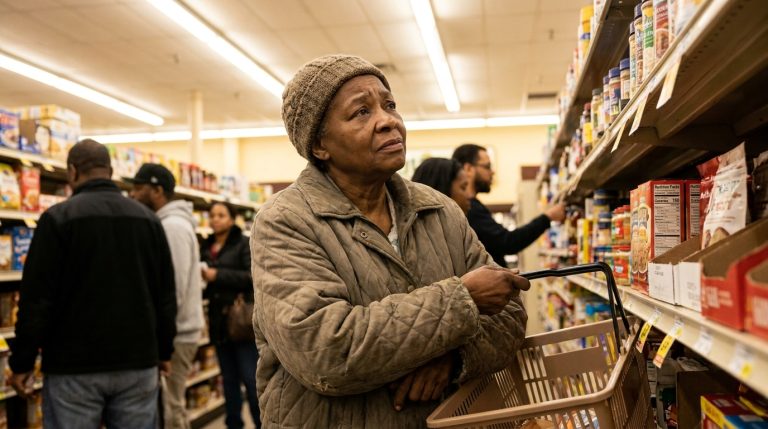
I want to talk about the grocery store because I think it has become something more than a place where people buy food. For many people my age, it has become a place where the anxiety lives.
I go on Tuesday mornings, same as I always have. I know the layout of that store the way I know the layout of my own house. I know which aisle has the canned tomatoes and which checkout lane moves fastest. I have been shopping there since my children were small enough to ride in the cart.
But something changed in that store a few years ago. The change came in gradually, the way water rises, and then one day you look down and realize you’re standing in something deeper than you expected.
I started noticing it first in the things I buy without thinking. The staples. The ones that had been the same price for so long that the price had stopped registering as information. Pasta. Rice. A can of black beans. Those things started costing noticeably more, and then a little more, and then more again, and at some point I realized I was doing math in the aisle in a way I hadn’t done since we were young and money was genuinely tight.
I don’t always put things back. But I consider putting them back. And the considering itself is a kind of stress that I didn’t expect to be carrying at this point in my life.
There is a particular feeling that comes with reaching for something you’ve bought without hesitation for thirty years and pausing before you put it in your cart. It’s not quite shame. It’s not quite fear. It’s something quieter and more persistent than either. A low awareness that the margin between comfortable and careful has gotten thinner than the plan said it would be.
The Bills That Arrive Without Apology
The grocery store is visible. You can see it happening in real time, price by price.
The bills are different. They arrive in envelopes or in emails and you open them privately, usually alone, and whatever you feel in that moment you feel by yourself.
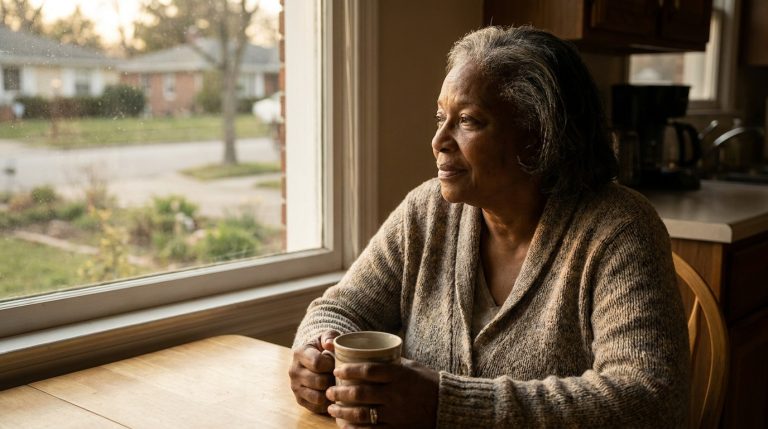
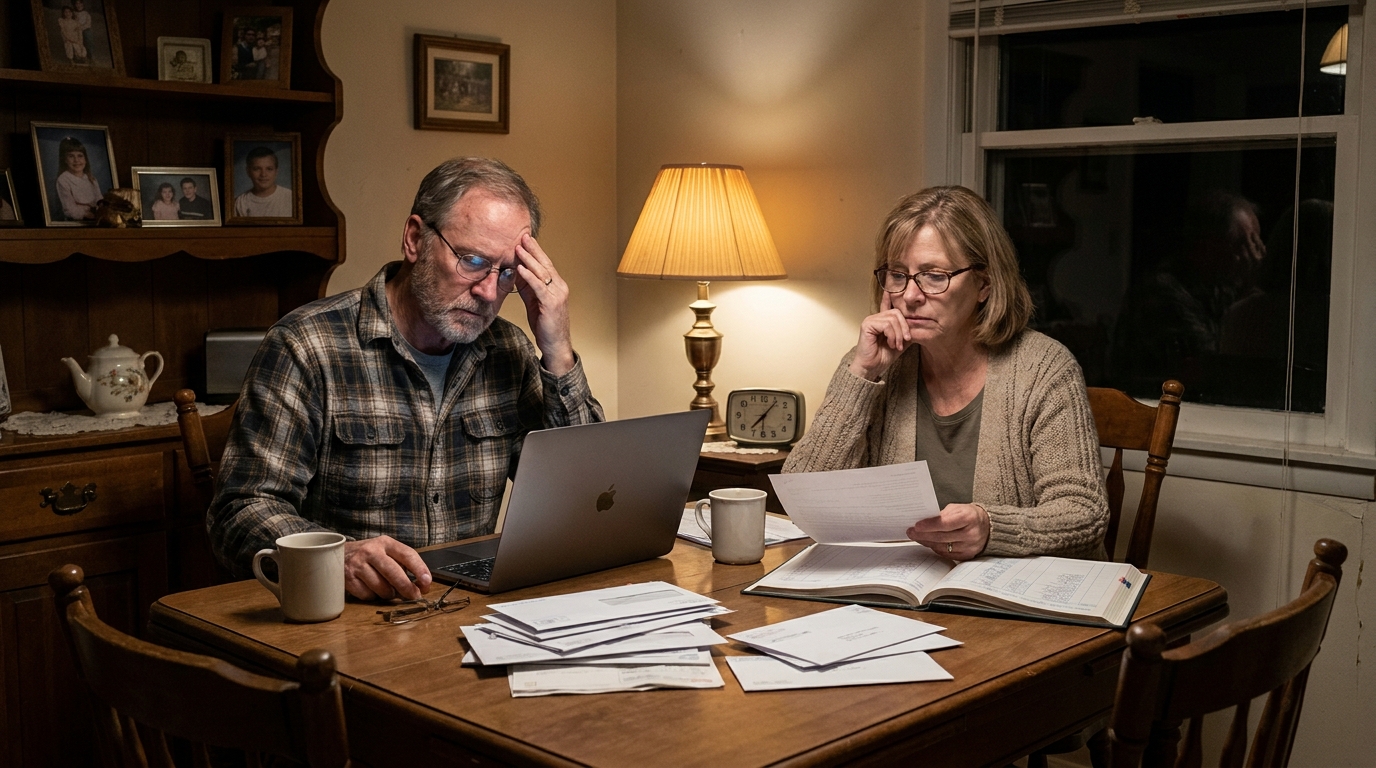
My electricity bill last August was higher than any bill I’d received in twenty years of living in this house. It was a hot summer, I understood that, but understanding a thing and absorbing it financially are two separate experiences. I sat with that bill at my kitchen table and did the mental arithmetic of what it meant for the rest of the month, and I felt something I can only describe as a quiet dread that I immediately told myself I wasn’t allowed to feel because we were fine, technically, we were fine.
That gap, between being technically fine and emotionally fine, is where a lot of retirees are living right now. And it is a gap that is rarely talked about in polite company.
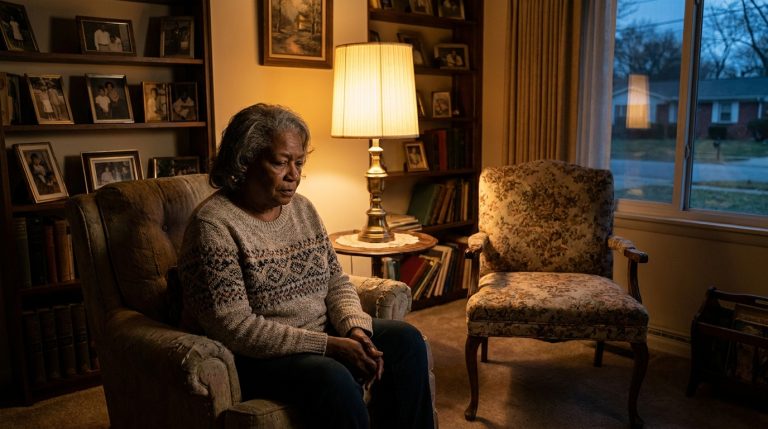
We paid the bill. We always pay the bills. But the paying has started to carry weight that it didn’t used to carry, and that weight accumulates. It sits in the body. It shows up at two in the morning when the house is dark and the mind starts doing arithmetic that daylight keeps at bay.
The Psychological Distance Between Expected and Actual
My advisor used a phrase I’ve never forgotten. He said we should plan for the retirement we wanted to have. And we did. We planned thoughtfully and honestly for a life that felt earned, comfortable, free from the financial anxiety of our working years.
What nobody fully prepares you for is the psychological impact of feeling less secure than you expected to feel. Not desperate. Not in crisis. Just less easy than the plan suggested you would be.
There is a specific kind of stress that comes from this particular gap. It is not the sharp stress of emergency. It is the dull, ongoing stress of recalibration. Of adjusting quietly and constantly. Of telling yourself that you’re managing, which you are, but noticing that managing requires more effort than it used to.
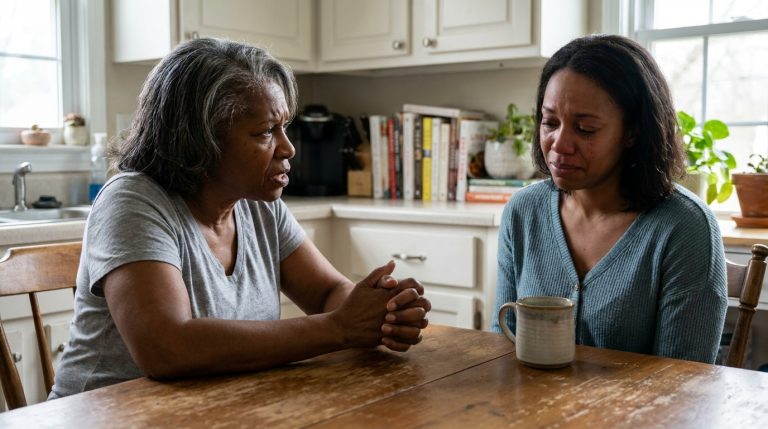
I spoke with a woman at my church, a retired nurse named Cecile, who said something that stayed with me for weeks. She said she felt like she was living in the right house but the furniture kept shifting. Everything was familiar, everything was recognizably her life, but nothing sat quite where she’d put it. She had to keep relearning the layout.
That is as accurate a description of inflation’s emotional impact as I’ve heard from anyone.
What We Carry and What We Don’t Say
Most people my age don’t talk about this directly. There is a generation-wide instinct to present as capable, as managing, as grateful for what we have, and we are grateful, genuinely, but gratitude and anxiety are not mutually exclusive, and pretending they are doesn’t make the anxiety smaller. It just makes it lonelier.
I have heard the same quiet recalibration in conversations with people across my life. A friend who stopped ordering the salmon when we go out to dinner and doesn’t explain why. A neighbor who cancelled the streaming service he’d had for years and mentioned it so casually I almost missed it. Small adjustments. Private economies. The quiet arithmetic of people who planned carefully and are now planning more carefully still.
None of us are complaining, exactly. Complaining feels like the wrong word for something this steady and structural. We are simply living inside a reality that shifted after we’d arranged our lives around a different set of assumptions, and we are doing what our generation has always done with hard things.
We are handling it. Quietly. Without making too much of a fuss.
But I want to say, for anyone who needs to hear it, that the handling is real work. That the quiet recalibration takes something out of a person, even when nobody can see it happening. That feeling financially unsettled in a season of life you spent decades trying to make secure is a legitimate and significant loss, even when it doesn’t look like a crisis from the outside.
The notebook in my purse is full. I started a second one last month.
I keep writing the prices down because bearing witness to something, even something difficult, feels more honest than looking away. And honesty, at this point in my life, is the thing I find I’m least willing to give up.